


Choosing the right Socket head cap screw comes down to matching strength grade, material, and surface finish to your actual load and environment — then confirming the standard and tolerance so the screw is truly interchangeable with your existing design. Ordering by size alone and treating grade or finish as an afterthought is the most common mistake, since it's what determines whether the fastener actually holds up in service.
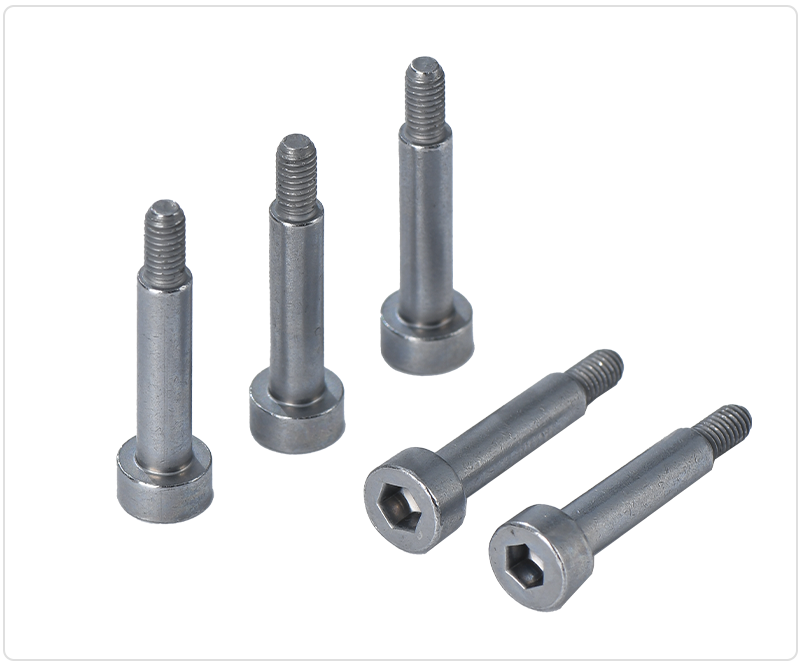
Match Strength Grade to Your Load Requirement
Socket head cap screws are commonly available in Grade 8.8, 10.9, and up to high-tensile Grade 12.9, with 10B21 alloy steel as a common base material for the higher grades. Higher grades handle greater tensile and shear loads but generally cost more and can be more brittle under shock loading, so match the grade to your actual application load rather than defaulting to the highest grade available. Confirm the grade marking on the screw head matches what's documented on your supplier's spec sheet, since grade stamping errors are a real quality issue in this industry.
Choose Material Based on Environment
Beyond alloy steel for high-strength general applications, Socket Head Cap Screws are commonly available in stainless steel 304 or 316 for corrosion-prone environments, with 316 offering better resistance in marine or chemical-exposure settings than 304. If your application runs outdoors, near moisture, or in a washdown environment, confirm whether alloy steel with a protective finish is sufficient or whether stainless is worth the added cost for your specific exposure conditions.
Pick a Finish for Corrosion Resistance and Appearance
Finish options commonly include plain, black oxide, zinc plating, nickel plating, and Geomet coating, along with environmentally friendly color zinc with hydrogen removal processing to reduce hydrogen embrittlement risk in high-strength fasteners. Black oxide is generally a lower-cost option for indoor, low-corrosion applications, while zinc or Geomet finishes offer more corrosion protection for outdoor or higher-humidity use. If you're specifying a high-grade screw (10.9 or 12.9), ask specifically whether hydrogen removal processing is included in the finishing step, since this affects the screw's resistance to delayed brittle failure under sustained load.
Confirm the Standard and Tolerance for Interchangeability
Socket Head Cap Screws are commonly manufactured to DIN 912, ISO 4762, or ANSI B18.3 standards, with precision up to ±0.01mm achievable via CNC machining for custom sizes. Confirm which standard your design was originally specified against, since dimensional details can differ slightly between DIN, ISO, and ANSI conventions even for a nominally "equivalent" size — a screw that's close enough by eye can still create fit or thread engagement problems in a precision assembly.
Confirm MOQ and Lead Time for Stock vs Custom Sizes
MOQ for socket head cap screws is commonly flexible, with stock sizes typically shipping in 3-5 days and custom specifications running 10-20 business days. If you're sourcing for a production timeline with a hard deadline, confirm upfront whether your required size, grade, and finish combination is a stock item or requires custom production, since the lead time difference is significant.
Questions to Ask Before You Order Socket Head Cap Screws
What strength grade does your application's load actually require, not just the highest grade available?
Does your environment call for stainless steel, or is a finished alloy steel screw sufficient?
Which standard — DIN 912, ISO 4762, or ANSI B18.3 — was your original design specified against?
For high-grade screws, does the finishing process include hydrogen removal treatment?
Is your required size, grade, and finish combination a stock item, or does it require custom production lead time?
If you know your grade, material, and standard, send them directly for a quote.
Frequently Asked Questions
What's the difference between Grade 8.8, 10.9, and 12.9 socket head cap screws?
Higher grade numbers indicate greater tensile strength, with Grade 12.9 being the highest common tier. Higher grades handle greater loads but can be more brittle under shock, so match the grade to your actual application rather than defaulting to the highest available.
Should I choose stainless steel or alloy steel socket head cap screws?
Stainless steel (304 or 316) suits corrosion-prone or marine environments, while finished alloy steel is generally sufficient and more cost-effective for indoor or lower-exposure applications. Match the material to your actual environmental exposure.
What does hydrogen removal processing do for high-strength screws?
It reduces the risk of hydrogen embrittlement, a delayed brittle failure mode that can affect high-strength fasteners after electroplating. Ask your supplier whether this step is included for Grade 10.9 or 12.9 screws specifically.
Are DIN 912, ISO 4762, and ANSI B18.3 socket head cap screws interchangeable?
They're similar but not always identical in dimensional detail. Confirm which standard your original design was specified against before assuming a screw made to a different standard will fit without issue.
