


What Are Self Tapping Screws Used For?
Self Tapping Screws are used for fastening materials where the screw is designed to form or cut its mating thread during installation. They are commonly used in metal fabrication, equipment assembly, hardware components, plastic applications, and other fastening tasks where a suitable threaded hole is not already available.
The specific use of a self tapping screw depends on its size, thread design, head type, drive type, point configuration, material, and surface finish. For example, pan head screws with a Phillips drive and sharp point can be used for specific hardware assembly applications, including door and window hardware.
Understanding different Self Tapping Screw Applications can help buyers select the appropriate screw for their materials and assembly requirements. This article explains the common uses of self tapping screws, how different designs affect their applications, and what to consider when choosing them.
What Are Self Tapping Screws Used For?
Self tapping screws are primarily used to fasten components by forming or cutting their mating thread as the screw is driven into a suitable material. This makes them useful for applications where a separate pre-threaded hole is not required.
Common Self Tapping Screws Uses include fastening metal components, sheet metal assemblies, equipment housings, hardware components, plastic parts, and various manufactured products. The appropriate screw must be selected according to the material and fastening requirements.
Unlike a one-size-fits-all fastener, self tapping screws are available in different configurations. A screw designed for a thin metal application may have different characteristics from one selected for plastic or hardware assembly.
Common Self Tapping Screw Applications
There are many Self Tapping Screw Applications across manufacturing and hardware assembly. The most suitable screw depends on the material being fastened and the required installation method.
Sheet Metal and Metal Components
Self tapping screws are commonly used for fastening sheet metal and other suitable metal components. The screw thread engages with the material as it is installed, creating the mating thread required for the fastening connection.
In these applications, screw diameter, length, thread specification, point design, and material are important factors when selecting a suitable fastener.
Equipment and Enclosures
Self tapping screws can also be used to assemble equipment housings, panels, covers, and other manufactured components. The screw configuration should be selected according to the thickness and material of the components being assembled.
Plastic Components
Some self tapping screws are used with plastic components and molded parts. However, plastic materials can have different characteristics, so screw geometry, size, installation method, and material compatibility should be considered before selecting a fastener.
Hardware Assembly
Hardware manufacturers can use self tapping screws for assembling various components where the screw needs to engage directly with the selected material. Head design, drive type, and point configuration can be specified according to the assembly requirements.
Self Tapping Screws for Door and Window Hardware
Self Tapping Screws for Door and Window Hardware are selected according to the specific requirements of hardware assemblies. Door and window hardware can include different components and materials, so screw size, head style, drive type, point design, material, and surface finish should be confirmed before purchasing.
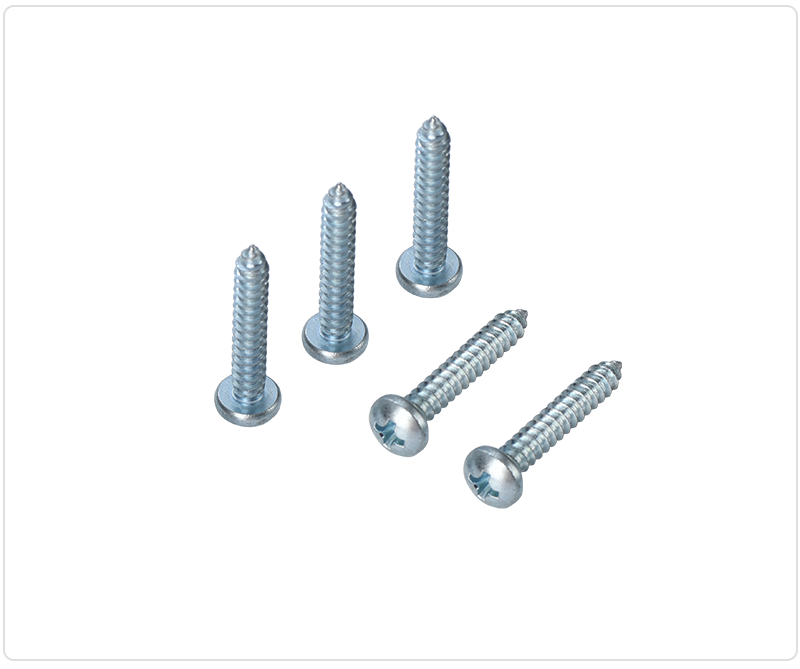
For example, a self tapping screw used for door and window hardware may feature a pan head, Phillips drive, and sharp point. These features provide a defined screw configuration for hardware manufacturers and distributors to specify when sourcing Fastening Components.
One example is product ALSA0420024, which is specified as #8-18 x 1". The screw is made from 1018 carbon steel and has a blue zinc plated finish. It features a pan head, Phillips drive, and sharp point and is specified for door and window hardware applications.
When purchasing Self Tapping Screws for Door and Window Hardware, buyers should compare the complete product specification rather than selecting a screw based only on its general name.
Pan Head Self Tapping Screws and Their Uses
Pan Head Self Tapping Screws have a rounded pan head profile and are available in different drive and point configurations. The head design provides a broad contact area around the fastening point and can be selected according to the requirements of the assembly.
Pan head self tapping screws can be used in hardware assembly, metal components, equipment parts, and other suitable fastening applications. Their actual use depends on the screw specification and the material being fastened.
For door and window hardware, a pan head configuration can be selected when this head profile is suitable for the specific component and assembly design.
Phillips Self Tapping Screws
Phillips Self Tapping Screws combine a self tapping thread and point configuration with a Phillips drive. The Phillips recess allows the screw to be installed using a compatible Phillips driver or screwdriver.
Phillips drive screws are available with different head styles, including pan heads. When selecting Phillips self tapping screws, the drive type should be considered together with the screw size, head type, point configuration, material, and intended application.
For example, product ALSA0420024 uses a Phillips drive together with a pan head and sharp point in a #8-18 x 1" configuration.
Sharp Point Self Tapping Screws
Sharp Point Self Tapping Screws feature a pointed tip that helps the screw engage with the material during installation. The point is an important part of the screw design because it initiates contact with the material before the threads engage.
Sharp point screws are available in different sizes, head styles, drive configurations, and materials. Their suitability depends on the material and the requirements of the fastening application.
For the door and window hardware product discussed in this article, the sharp point is combined with a pan head, Phillips drive, 1018 carbon steel construction, and blue zinc plated finish.
How to Choose Self Tapping Screws for Different Uses
Choosing the correct self tapping screw requires more than simply identifying the screw as a self tapping type. Buyers should consider several product specifications before selecting a fastener.
Size: Confirm the required diameter and length.
Head type: Select a pan head or another suitable head configuration.
Drive type: Choose the appropriate drive, such as Phillips.
Point type: Consider whether a sharp point is suitable for the material and application.
Material: Select a material that matches the product and purchasing requirements.
Surface finish: Specify the required surface treatment, such as blue zinc plating.
Application: Match the screw to the actual assembly and hardware requirements.
For example, the product described in this article is a #8-18 x 1" self tapping screw made from 1018 carbon steel with a blue zinc plated finish. Its pan head, Phillips drive, and sharp point are specified for door and window hardware applications.
What Factors Affect Self Tapping Screw Uses?
The use of a self tapping screw is influenced by several factors. Material thickness is important because the screw must be suitable for the material and the required fastening depth. Screw diameter and length also affect how the fastener fits within the assembly.
The head and drive design influence installation, while the point configuration affects how the screw initially engages with the material. Material and surface finish are additional specifications that buyers may need to define when sourcing screws for production.
For this reason, manufacturers and purchasing teams should provide complete product requirements when requesting self tapping screws rather than relying only on a general product name.
Self Tapping Screws for Hardware Manufacturers
Manufacturers sourcing Self Tapping Screws for production should consider both the individual screw specifications and the final application. Providing details such as size, head type, drive type, point type, material, surface finish, and quantity can make product sourcing more precise.
For door and window hardware applications, a clearly defined specification such as #8-18 x 1", 1018 carbon steel, blue zinc plated finish, pan head, Phillips drive, and sharp point helps buyers identify the required product configuration.
F&Q
What are self tapping screws mainly used for?
Self tapping screws are mainly used to fasten suitable materials by forming or cutting their mating thread during installation. Common applications include metal components, equipment assemblies, hardware, and other manufactured products.
Can self tapping screws be used for door and window hardware?
Yes. Self tapping screws can be specified for door and window hardware when their size, head type, drive type, point configuration, material, and finish are suitable for the application.
What are Pan Head Self Tapping Screws used for?
Pan Head Self Tapping Screws can be used for fastening applications where a pan head configuration is appropriate. Their exact application depends on the screw specification and the material being fastened.
What are Phillips Self Tapping Screws?
Phillips Self Tapping Screws are self tapping screws with a Phillips drive recess. They can be supplied in different sizes, head styles, materials, and point configurations.
What are Sharp Point Self Tapping Screws?
Sharp Point Self Tapping Screws have a pointed tip designed to help the screw engage with the material during installation. The appropriate screw should be selected according to the material and application.
Self tapping screws are used across many fastening applications, including metal components, equipment assemblies, hardware, and door and window hardware. Their specific uses depend on the material, screw size, head design, drive type, point configuration, material, and surface finish.
For door and window hardware applications, a product such as ALSA0420024 combines a #8-18 x 1" size with a pan head, Phillips drive, sharp point, 1018 carbon steel construction, and blue zinc plated finish. Understanding these specifications can help manufacturers, distributors, and purchasing teams select the appropriate Self Tapping Screw for their intended application.
