


Choosing a hex socket head cap screw supplier comes down to four checks: material grade, tolerance precision, surface treatment options, and quality documentation. A supplier who can't tell you their tensile strength grade, machining tolerance, or provide test reports isn't set up for critical assemblies — and a screw that fails in an automotive or machinery application costs far more than the screw itself. This guide covers what to check before placing an order, so you're evaluating suppliers on substance instead of price alone.
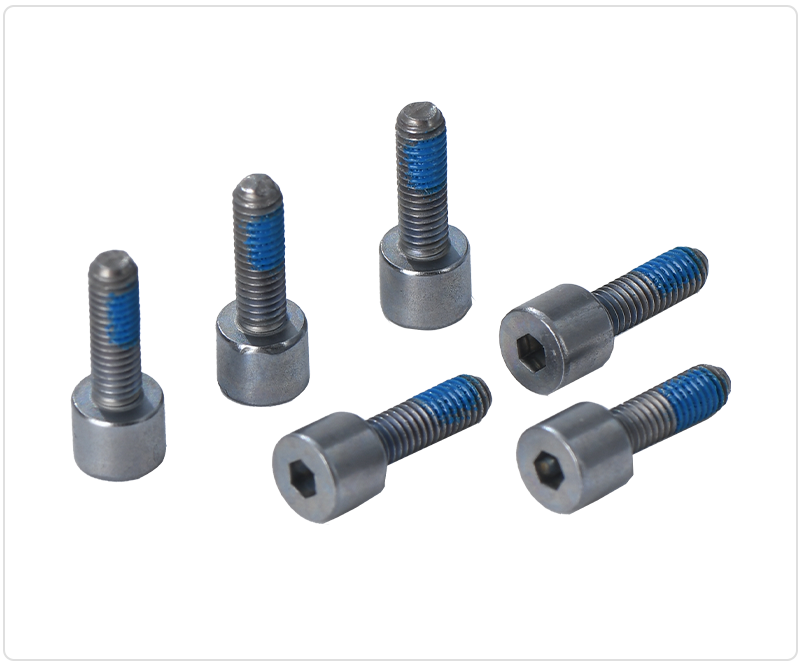
Material Grades at a Glance
| Material | Grade | Best For |
|---|---|---|
| Alloy Steel | 8.8 | General-purpose fastening, moderate load applications |
| Alloy Steel | 10.9 | Higher-strength assemblies, moderate to heavy load |
| Alloy Steel | 12.9 | Maximum load-bearing capacity, heavy-duty industrial use |
| Stainless Steel | 304 | General corrosion resistance, moderate strength requirements |
| Stainless Steel | 316 | Higher corrosion resistance for harsh or marine environments |
1. Material Grade and Strength
The material grade determines how much load the screw can bear before yielding or failing. Alloy steel graded 8.8, 10.9, or 12.9 covers most industrial applications, with 12.9 offering maximum tensile strength for heavy-duty use in automotive, machinery, and structural assemblies. Stainless steel (304 or 316) trades some strength for corrosion resistance, with 316 holding up better in harsh or marine environments. A supplier should be able to clearly state which grade a given screw is manufactured to — vague answers here are a red flag.
2. Machining Tolerance
For precision assemblies in automotive, machinery, or electronics, tolerance matters as much as material. CNC machining and cold heading processes should hold tight tolerances — look for suppliers who can quote tolerances down to ±0.01mm and explain their production method, rather than giving a generic "high precision" claim without a number attached.
3. Surface Treatment Options
Surface treatment affects both corrosion resistance and appearance. Common options include environmentally friendly color zinc plating, Zinc-Nickel Coating for enhanced corrosion resistance in harsh environments, and passivation for stainless steel parts. The right choice depends on the operating environment — a screw used outdoors or in a corrosive environment needs different protection than one used in a dry, indoor assembly.
4. Quality Documentation and Testing
A supplier producing fasteners for critical assemblies should be able to provide Material Test Reports (MTR) and Certificates of Conformance (COC) with every shipment, along with evidence of routine testing — 2D/3D projector inspection, hardness testing, and salt spray testing for corrosion resistance. If a supplier can't produce documentation on request, treat that as a sourcing risk, not a minor omission.
Need a socket head cap screw manufactured to a specific grade, tolerance, or coating? Send us your drawing or spec sheet, and we'll confirm feasibility and lead time within 24 hours.
5. Custom and Non-Standard Capability
Standard Hex Socket Head Cap Screws cover most needs, but many assemblies require non-standard sizes, thread pitches, or head styles — including button head and flat head socket cap screws. A supplier with genuine custom manufacturing experience should be able to work directly from technical drawings and produce any size or thread pitch to spec, not just offer a limited catalog of stock sizes.
6. MOQ and Lead Time
Flexibility here matters whether you're testing a new assembly or placing a production order. Look for suppliers offering both small-batch prototype runs and mass production pricing, with samples available for quality verification before a bulk order. As a general benchmark, stock items should ship in 3-5 days, while custom production typically takes 10-20 business days — anything significantly longer without a clear reason is worth questioning.
Ready to get a quote? Tell us your specification — size, grade, coating, and quantity — and we'll respond with pricing and lead time.
Frequently Asked Questions
1. What is the difference between grade 8.8 and grade 12.9 screws?
Grade 12.9 offers significantly higher tensile strength and load-bearing capacity than grade 8.8, making it suited to heavy-duty industrial applications. Grade 8.8 covers general-purpose fastening needs at a lower cost where maximum strength isn't required.
2. Can a manufacturer produce non-standard Socket Head Cap Screws?
Yes, a manufacturer with genuine custom fastener experience can produce non-standard sizes and thread pitches based on technical drawings, not just catalog stock items. Confirm this capability directly rather than assuming it from a standard product listing.
3. What quality documentation should a screw supplier provide?
At minimum, expect Material Test Reports (MTR) and Certificates of Conformance (COC) with shipments, along with evidence of routine testing such as dimensional inspection, hardness testing, and salt spray testing for corrosion resistance.
4. What's a typical MOQ for custom Hex Socket Head Cap Screws?
MOQ varies by supplier, but many offer flexible options supporting both small-batch prototype runs and full production orders. Sample availability for quality verification before committing to a bulk order is a good sign of supplier flexibility.
