


How Do You Select the Correct Screw Size for a Baby Stroller?
Choosing the correct screw size is an important part of designing and assembling a reliable baby stroller. Baby Stroller Screws are used to connect frames, brackets, folding mechanisms, wheels, handles, seats, and other components. The right screw must match the hole diameter, thread type, material thickness, joint design, and assembly method. A screw that is too short may not provide enough thread engagement, while one that is too long can interfere with internal components or affect the movement of the stroller.
For manufacturers and buyers, screw selection should therefore go beyond simply measuring the overall screw length. Factors such as screw diameter, thread pitch, head style, material, surface treatment, and installation torque should also be considered. Understanding these factors can help manufacturers select suitable Baby Stroller Hardware and maintain consistent assembly quality.
What Factors Determine the Correct Baby Stroller Screw Size?
Several factors should be evaluated before selecting Baby Stroller Screws. The most important ones include the thickness of the materials being joined, the required thread engagement, the hole diameter, the available installation space, and the mechanical requirements of the joint.
For example, a screw connecting a metal bracket to a stroller frame may require different dimensions from a screw used to attach a plastic component. The screw must provide sufficient engagement without damaging the component or creating unnecessary stress.
How Do You Determine the Correct Screw Diameter?
Screw diameter should match the design of the threaded hole or fastening system. If the screw diameter is too small, the connection may not provide adequate mechanical strength. If it is too large, it may damage the threaded hole or surrounding material.
Manufacturers normally determine the required diameter during product design and prototype testing. The selected diameter should correspond to the load requirements of the joint and the material used for the stroller component. Standard metric sizes are commonly used in manufacturing, but the exact specification depends on the product design and target market.
How Do You Choose the Correct Screw Length?
Screw length is another critical consideration. The correct length should provide sufficient thread engagement while avoiding excessive protrusion beyond the joint.
When selecting Stroller Screws, manufacturers should measure the total thickness of the components being joined and then determine the required engagement length. The screw should be long enough to form a stable connection but not so long that it interferes with moving parts, creates an exposed sharp end, or contacts another component.
For assemblies containing washers, spacers, brackets, or other hardware, their thickness should also be included when calculating the required screw length.
Why Is Thread Engagement Important?
Thread engagement refers to the portion of the screw thread that properly engages with the mating thread. Insufficient engagement can reduce the holding capability of the joint, while excessive engagement may not provide meaningful additional performance and can create assembly problems.
The appropriate engagement depends on the screw material, mating material, thread diameter, and joint design. Metal-to-metal connections and metal-to-plastic connections may require different approaches. For this reason, manufacturers should evaluate the complete fastening system rather than selecting screws based only on nominal size.
How Does the Screw Head Design Affect Size Selection?
The screw head must also fit the surrounding component. Common options include pan head, flat head, and other specialized designs. A pan head screw may be suitable where the head can remain above the surface, while a countersunk screw may be preferred when a flush surface is required.
The available clearance around the screw head should be checked carefully. This is particularly important in folding mechanisms, adjustable handles, wheel assemblies, and other areas where components move relative to each other.
What Role Does Material Play in Selecting Baby Stroller Screws?
Screw material affects strength, corrosion resistance, machinability, and compatibility with other components. Carbon steel is commonly used for various industrial fastening applications because of its mechanical properties and manufacturing flexibility. Stainless steel may be selected when greater corrosion resistance is required.
When choosing Baby Stroller Fasteners, manufacturers should consider both the screw material and the material of the components being joined. Material compatibility can influence corrosion behavior, thread performance, and long-term durability.
How Can Manufacturers Confirm the Correct Screw Size?
Before mass production, manufacturers can verify screw specifications through prototype assembly and testing. The process may include checking diameter, length, thread engagement, head clearance, installation torque, and joint performance.
Engineering drawings should clearly specify the screw diameter, length, thread specification, head type, material, and surface treatment. This provides a consistent reference for purchasing and production teams and helps prevent incorrect fasteners from entering the assembly line.
Why Should Baby Stroller Screw Specifications Be Standardized?
Standardized screw specifications make production easier to control. Using defined specifications for Baby Stroller Screws can simplify procurement, inventory management, assembly, inspection, and replacement.
For manufacturers producing multiple stroller models, standardized fastening specifications can also reduce the number of different components that need to be stocked. However, standardization should not replace engineering evaluation. Each connection still needs to be checked according to its specific mechanical and dimensional requirements.
How Do You Prevent Corrosion on Baby Stroller Screws?
Corrosion can affect the appearance and long-term performance of metal fasteners. Baby strollers may be exposed to humidity, rain, perspiration, cleaning products, and temperature changes during normal use and storage. Selecting appropriate materials and surface treatments is therefore an important consideration when producing Baby Stroller Screws.
Corrosion prevention generally involves three areas: selecting suitable screw materials, applying an appropriate surface treatment, and controlling environmental exposure.
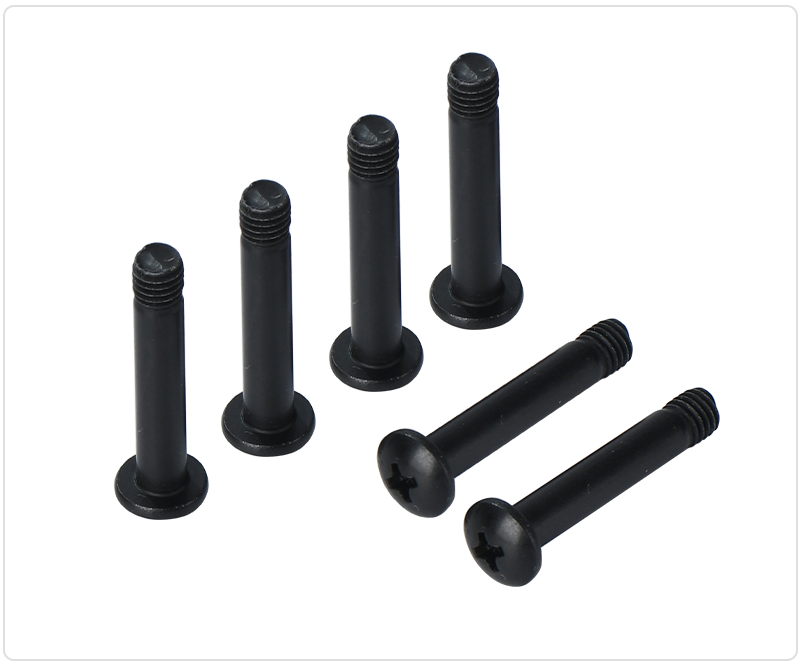
What Materials Provide Better Corrosion Resistance?
Stainless steel is often considered when corrosion resistance is a major requirement. Different stainless steel grades provide different combinations of corrosion resistance, strength, and manufacturing characteristics.
Carbon steel screws can also be used when combined with suitable protective coatings. The appropriate choice depends on the stroller design, expected environment, cost requirements, and mechanical performance required from the joint.
How Does Surface Treatment Protect Stroller Screws?
Surface treatment creates a protective layer between the screw material and the surrounding environment. Depending on the application, manufacturers may use coatings or plating designed to improve resistance to moisture and oxidation.
Common surface treatment options for Stroller Hardware may include zinc-based coatings and other protective finishes. The selected treatment should be compatible with the screw material and the intended application. Coating thickness, adhesion, appearance, and corrosion resistance should also be controlled during production.
How Can You Reduce Corrosion Caused by Moisture?
Moisture is one of the main environmental factors contributing to corrosion. Stroller components should therefore be designed to minimize areas where water can accumulate around fasteners.
Proper drainage, suitable component geometry, protective coatings, and appropriate material selection can all help reduce moisture-related corrosion. During product testing, manufacturers can also evaluate fasteners under conditions that simulate expected humidity and environmental exposure.
Can Different Metals Cause Corrosion Problems?
Yes. When dissimilar metals are placed in contact with each other in the presence of an electrolyte such as moisture, galvanic corrosion can occur. This is why material compatibility should be considered when selecting Baby Stroller Hardware.
Manufacturers can reduce this risk by selecting compatible materials, using suitable coatings, or introducing appropriate isolation between dissimilar metals where necessary.
How Should Baby Stroller Screws Be Inspected?
Inspection should cover both dimensional and surface characteristics. Important checks may include screw diameter, length, thread accuracy, head dimensions, coating condition, surface defects, and overall appearance.
For production applications, incoming inspection and process quality control can help ensure that Baby Stroller Fasteners remain consistent from batch to batch. For customized screws, manufacturers should also verify that production parts match the approved drawings and samples.
What Should You Consider When Buying Baby Stroller Screws?
When sourcing Baby Stroller Screws, buyers should provide detailed specifications rather than only requesting a general screw type. Useful information includes screw diameter, length, thread specification, head style, material, surface treatment, quantity, and application.
A qualified screw manufacturer can use these specifications to recommend an appropriate fastening solution and produce samples for evaluation before mass production. For custom stroller components, close communication between the stroller designer and fastener manufacturer can also help prevent dimensional or assembly problems.
Selecting the correct screw size for a baby stroller requires more than choosing a standard diameter and length. Manufacturers should consider the joint structure, material thickness, thread engagement, head design, material, surface treatment, and installation requirements. At the same time, corrosion prevention depends on selecting suitable materials, applying appropriate protective treatments, controlling moisture exposure, and considering material compatibility.
By evaluating these factors during the design and manufacturing stages, manufacturers can develop more consistent fastening solutions for different stroller assemblies. Whether sourcing standard Baby Stroller Screws or developing custom Stroller Screws, detailed specifications and controlled production processes are essential for achieving reliable results.
