


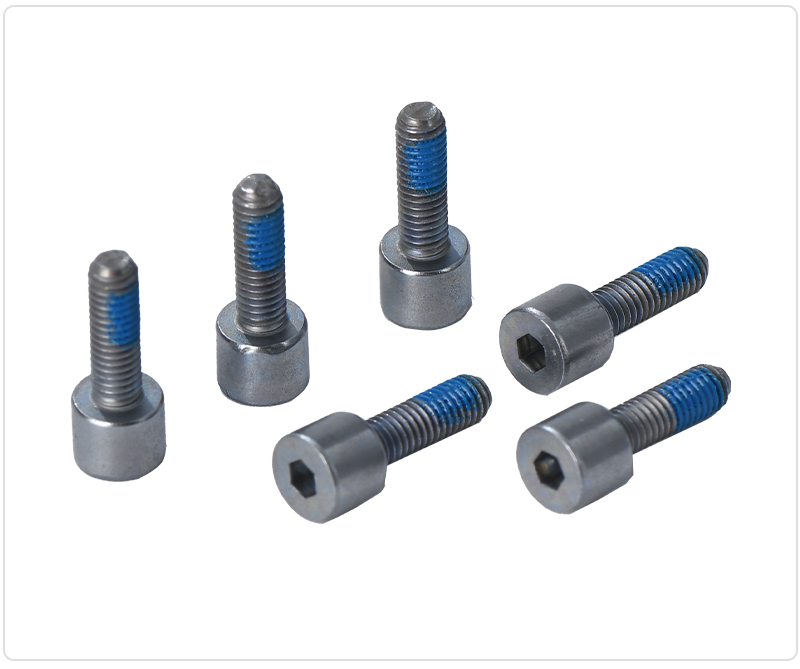
A hex Socket head cap screw is a precision fastener with a cylindrical head and an internal hexagonal drive recess. It is widely used in machinery, industrial equipment, automotive assemblies, and other applications where reliable fastening and compact tool access are important. Manufacturing a hex socket head cap screw involves several stages, including raw material selection, wire preparation, cold heading or machining, socket formation, thread production, heat treatment when required, surface finishing, and quality inspection.
The exact process depends on the screw's material, dimensions, strength requirements, production volume, and applicable standard. Understanding these manufacturing stages helps engineers and buyers evaluate fastener quality and choose suitable products for their applications.
1. Selecting the Raw Material
The manufacturing process begins with selecting a suitable material. Common options include carbon steel, alloy steel, and stainless steel. Each material offers different mechanical properties and environmental performance.
Carbon steel: Commonly used for general-purpose fasteners, with properties determined by the material grade and any subsequent heat treatment.
Alloy steel: Used when specific strength, hardness, or toughness requirements must be met.
Stainless steel: Selected for applications requiring improved corrosion resistance, although its strength and galling behavior depend on the specific grade and operating conditions.
Manufacturers consider the intended application, required strength class, operating temperature, exposure to moisture or chemicals, and relevant fastener standards before choosing the raw material.
2. Wire Drawing and Material Preparation
For high-volume production, steel wire is commonly supplied in coils. Before forming, the wire may undergo drawing to achieve the required diameter and dimensional consistency.
The material may also receive surface cleaning, lubrication, and other preparation treatments. These steps help reduce friction during forming and support consistent production quality.
Wire diameter is an important control point because it influences the final screw dimensions and the amount of material available to form the head. Material defects or inconsistent wire dimensions can lead to forming problems and rejected fasteners.
3. Forming the Cylindrical Head
Many Hex Socket Head Cap Screws are produced using cold heading, also called cold forming. In this process, a cut length of prepared wire is placed into a forming die and shaped under high pressure at or near room temperature.
The forming equipment progressively moves material into the required head shape. This process creates the cylindrical head and the basic screw body while allowing large quantities of fasteners to be produced efficiently.
Cold heading offers several advantages:
High production efficiency for standard fastener designs.
Good dimensional repeatability when tooling and process parameters are controlled.
Reduced material waste compared with machining the entire screw from solid stock.
Potential improvements in material flow and mechanical properties through appropriate forming.
Not every screw is manufactured using the same method. Low-volume, special-design, or large fasteners may require machining or a combination of forming and machining operations.
4. Creating the Hexagonal Socket
The internal hexagonal recess is the defining feature of a hex socket head cap screw. It allows an Allen key or hex driver to engage with the screw head and transfer rotational force during installation and removal.
Depending on the product design and manufacturing system, the socket may be formed during a heading operation or produced through a subsequent operation. Manufacturers use dedicated tooling to create the required internal shape and control the socket's depth and dimensions.
Socket geometry is important because the recess must accommodate the specified hex key while providing adequate engagement. If the socket is too shallow, incorrectly sized, or poorly formed, the screw may be difficult to install and more susceptible to drive damage under excessive torque.
Inspection may include checking the internal hex size, socket depth, head dimensions, and overall appearance against the applicable product drawing or standard.
5. Cutting or Rolling the Threads
After the basic screw shape has been formed, external threads must be produced. Two common methods are thread rolling and thread cutting.
Thread Rolling
Thread rolling forms threads by pressing the screw blank between hardened dies. The material is displaced into the required thread profile rather than removed as chips.
This process is widely used in mass production because it can deliver consistent thread dimensions and high productivity. Depending on the material and process, the resulting thread surface and grain flow may provide beneficial mechanical performance.
Thread Cutting
Thread cutting removes material to create the required thread profile. It is useful for certain special fasteners, low-volume production runs, and designs that are not practical to produce through conventional rolling.
The choice between rolling and cutting depends on the fastener design, material, tolerances, equipment, and production requirements. In either case, thread dimensions and fit must meet the applicable specification.
6. Heat Treatment and Mechanical Properties
Some Hex Socket Head Cap Screws, particularly those made from carbon or alloy steel, undergo heat treatment to achieve the required hardness, strength, and toughness. The specific process depends on the steel grade and the required property class.
Heat treatment may include controlled heating, quenching, and tempering. These operations must be carefully managed because excessive hardness, insufficient toughness, or inconsistent treatment can affect fastener performance.
Not all materials use the same heat-treatment process. Stainless steel fasteners, for example, have different metallurgical requirements depending on their grade and intended mechanical properties.
Manufacturers may verify mechanical performance through applicable hardness, tensile, proof-load, or other tests. The appropriate test requirements depend on the product standard and specified property class.
7. Surface Treatment and Finishing
Surface finishing can improve corrosion resistance, appearance, or other performance characteristics. The selected finish depends on the base material, intended environment, and customer specifications.
Common options include:
Black oxide: Often used for appearance and limited corrosion protection when combined with suitable maintenance or oiling.
Zinc-based coatings: Used on compatible steel fasteners to improve corrosion protection, subject to coating specifications and hydrogen embrittlement considerations.
Other protective coatings: Selected according to environmental exposure, friction requirements, and applicable regulations.
Uncoated stainless steel: Often used when the corrosion resistance of the selected stainless steel grade is appropriate for the application.
Surface treatments can affect dimensions, friction, and assembly performance. Manufacturers must ensure that finishing processes are compatible with the material and the required fastener specifications.
8. Quality Inspection and Dimensional Testing
Quality inspection confirms that finished screws meet their specified requirements. Depending on the product and quality plan, inspection may take place during production as well as after manufacturing.
Important inspection items include:
Nominal thread diameter, pitch, and thread fit.
Overall screw length and head height.
Head diameter and cylindrical head geometry.
Internal hex socket dimensions and depth.
Surface condition, cracks, burrs, and other visible defects.
Hardness and mechanical properties when required.
Coating thickness or corrosion-related performance when specified.
Socket head cap screw dimensions should be checked against the applicable drawing or recognized standard. A socket head cap screw size chart can help users understand common nominal sizes, head dimensions, and internal hex sizes, but the actual production specification should take precedence.
Hex socket screw sizes vary with nominal diameter, thread system, and standard. Manufacturers therefore need to confirm whether a fastener is metric or imperial and verify all relevant dimensions rather than relying on visual comparisons.
9. Packaging and Traceability
After inspection, accepted fasteners are sorted and packaged according to size, material, strength class, finish, and order requirements. Packaging helps prevent contamination, surface damage, and mixing of similar-looking fasteners.
For industrial applications, product labels and inspection records may include dimensions, material identification, property class, batch information, and applicable standards. Traceability is particularly important when fasteners are used in equipment with demanding quality or safety requirements.
What Standards Apply to Hex Socket Head Cap Screws?
Hex socket head cap screws are manufactured according to product standards and engineering specifications that define important dimensions and requirements. ISO 4762 is a widely recognized standard for hexagon socket head cap screws, while DIN 912 is the traditional German designation commonly associated with this fastener type.
When comparing products, buyers should verify the applicable standard and its specified requirements rather than assuming that every product carrying a familiar designation is identical in every detail. Material, property class, thread tolerance, finish, and dimensional requirements should also be checked.
Frequently Asked Questions
Are hex socket head cap screws cold forged?
Many standard hex socket head cap screws are produced using cold heading or cold forming, particularly in high-volume manufacturing. However, machining or other production methods may be used for specialized designs or particular production requirements.
How are the threads made on socket head cap screws?
Threads are commonly produced by thread rolling in mass production. Thread cutting is another option for certain designs and manufacturing conditions. The method depends on the fastener material, design, tolerances, and production volume.
Why are quality inspections important?
Inspection helps ensure that the screw dimensions, socket geometry, threads, material properties, and finish meet the specified requirements. Inconsistent dimensions or inadequate mechanical properties can affect installation, joint performance, and service life.
Conclusion
Manufacturing a hex socket head cap screw involves a sequence of controlled operations, from material selection and wire preparation to head forming, socket production, thread formation, heat treatment when required, surface finishing, and final inspection.
Each stage contributes to the finished fastener's dimensional accuracy, mechanical properties, and suitability for its intended application. When selecting screws, buyers and engineers should review the applicable standard, material, strength grade, socket head cap screw dimensions, and thread specifications. Using an accurate socket head cap screw size chart and verified technical documentation helps ensure that the selected fastener matches the assembly's requirements.
```
