


Hexagonal Studs and threaded rods are both Fastening Components, but they serve different structural and assembly purposes. A hexagonal stud is typically a headless fastener with threads on one or both ends designed for precise mechanical connections, often paired with nuts. In contrast, a threaded rod is a long, fully threaded bar used for continuous length fastening, anchoring, or extension applications. The key difference lies in their design purpose, load distribution, and installation method—Hexagonal Studs are used for fixed, high-strength assemblies, while threaded rods are more flexible for general-length fastening or structural support.
Understanding Hexagonal Studs
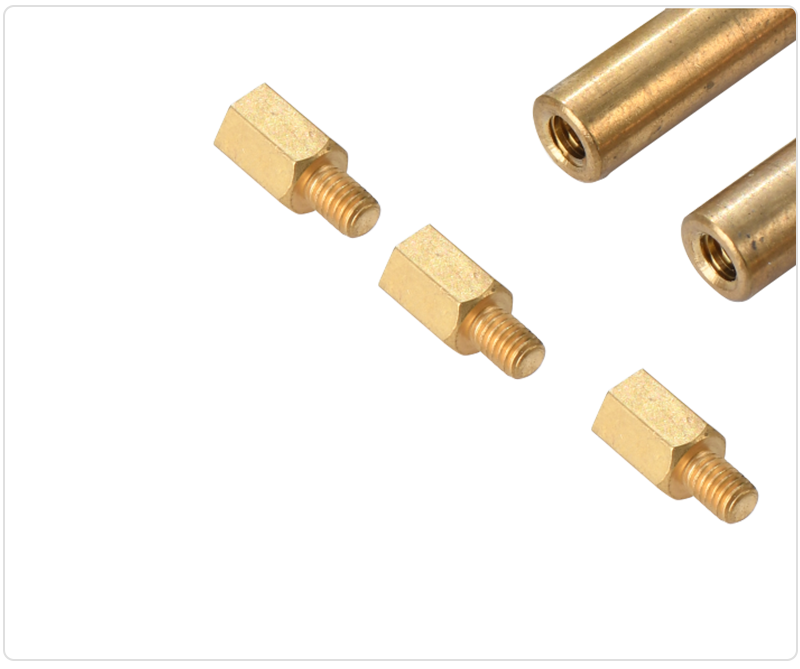
A hexagonal studs component is a type of fastener designed without a traditional bolt head. Instead, it usually has a threaded structure that allows nuts to be tightened on one or both ends. This design provides a strong and stable connection in mechanical systems where space is limited or where high clamping force is required.
In many industrial applications, a hexagonal stud is preferred because it allows more precise torque control and better alignment of connected parts. It is commonly used in machinery, engines, flange connections, and heavy equipment assembly.
Compared with general fasteners, a hexagonal stud provides better resistance to loosening under vibration, making it ideal for demanding environments.
What Is a Threaded Rod?
A threaded rod is a long metal bar that is fully threaded along its entire length. Unlike a stud bolt, it does not have a defined unthreaded section or installation end. Instead, it offers maximum flexibility in terms of cutting and adjusting length according to project requirements.
A threaded stud is often confused with threaded rods, but they are not identical. While a threaded stud usually refers to a partially threaded fastener used for joining components, a threaded rod is more of a general-purpose structural element used in construction, plumbing, and electrical installations.
Because of its continuous threading, a threaded rod is easy to customize and is widely used in anchoring systems, suspension supports, and framing structures.
Key Differences Between Hexagonal Studs and Threaded Rods
The primary difference between a hexagonal stud and a threaded rod lies in their structure and application.
A hexagonal stud is typically designed for precision fastening. It is commonly used in situations where components must be tightly aligned and secured under high pressure. In many cases, a double end stud bolt configuration is used, where both ends are threaded to allow nuts on both sides of a joint. This design improves load distribution and ensures strong mechanical locking.
On the other hand, a threaded rod is fully threaded from end to end, offering flexibility rather than precision alignment. It is better suited for applications where length adjustment and versatility are more important than torque precision.
Another key difference is installation method. A hexagonal stud is often installed into a tapped hole or used with pre-positioned components, while a threaded rod is usually cut to size and used with nuts and washers on both ends.
Material and Strength Considerations
Both hexagonal studs and threaded rods can be manufactured from various materials, including carbon steel, stainless steel, and alloy steel. However, the choice of material often depends on load requirements and environmental conditions.
For high-strength applications, a fully threaded stud made from alloy steel is commonly used in heavy machinery and pressure systems. Stainless steel versions are preferred in corrosive environments such as marine or chemical industries.
Threaded rods, while also available in high-strength grades, are more often used in structural or non-critical applications where extreme torque resistance is not required.
Applications in Industry
Hexagonal studs are widely used in automotive engines, turbines, pumps, and flange connections where precise alignment and strong clamping force are essential. The use of a double end stud bolt is especially common in flange joints, ensuring both sides are evenly tightened.
Threaded rods, however, are commonly found in construction projects such as ceiling suspension systems, HVAC installations, electrical support frameworks, and general anchoring systems.
Both fasteners play important roles, but they are selected based on engineering requirements rather than interchangeability.
In summary, the difference between hexagonal studs and threaded rods is mainly about design purpose and application. A hexagonal stud offers precision, strength, and controlled fastening, often used in critical mechanical assemblies. A threaded rod provides flexibility and length adjustability for general structural use. Understanding these differences helps engineers and buyers choose the right fastener for safety, performance, and cost efficiency.
