


A counterbore for a hex socket head cap screw should be deep enough to accommodate the screw head at the required position without removing unnecessary material from the component. For a flush installation, the nominal counterbore depth is generally based on the head height of the specific socket head cap screw. If the screw head needs to sit below the surface, the required recess depth is added to the head height.
In simple terms, the basic calculation is:
Counterbore depth = socket head cap screw head height + required recess below the surface
For example, if a socket head cap screw has a head height of 8 mm and the design requires the top of the screw head to sit 1 mm below the surrounding surface, the nominal counterbore depth would be approximately 9 mm. The actual machining dimension should also consider the applicable fastener standard, dimensional tolerances, assembly requirements, and the remaining material thickness of the component.
What Is a Counterbore for a Socket Head Cap Screw?
A counterbore is a cylindrical recess machined into a component around a hole. It allows the cylindrical head of a socket head cap screw to sit below or level with the surrounding surface.
A hexagon socket head cap screw has a cylindrical head with an internal hexagonal drive. Because of its cylindrical head shape, it is commonly installed in a counterbored hole when a recessed or flush fastener is required.
Counterbores are frequently used in machinery, CNC equipment, molds, fixtures, tooling, automation equipment, robotics, and precision assemblies. They can help prevent the screw head from interfering with moving components or adjacent parts.
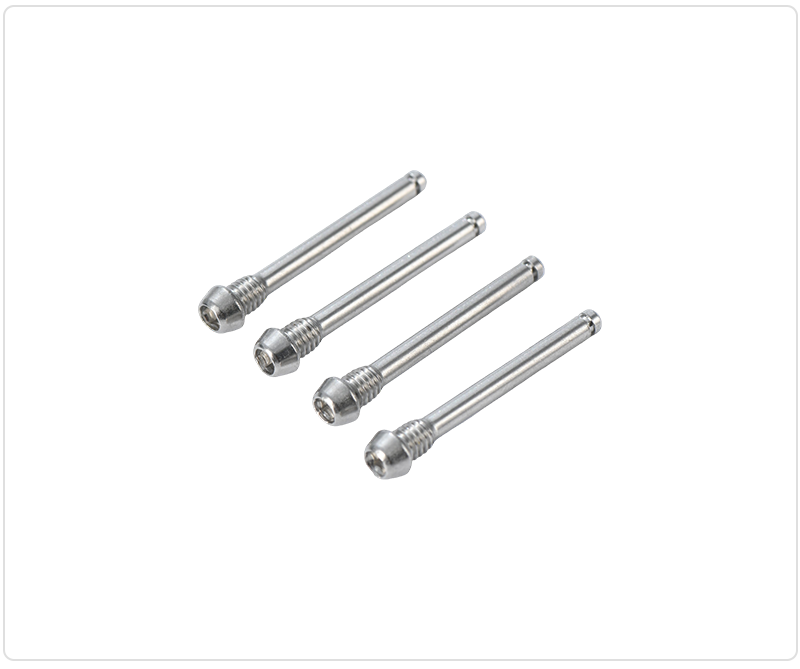
How Deep Should a Counterbore Be?
There is no single counterbore depth that applies to every hex socket head cap screw. The correct depth depends primarily on the dimensions of the selected fastener and the position required by the assembly.
For a flush installation, the counterbore depth is normally close to the head height of the screw. If the screw head must be recessed below the component surface, the depth is increased by the required amount of recess.
The basic relationship can be written as:
Dc = H + R
Where:
Dc = nominal counterbore depth
H = head height of the socket head cap screw
R = required amount of head recess below the component surface
For example, if the screw head is 8 mm high and the design requires the head to be recessed 0.5 mm below the surface:
Dc = 8 mm + 0.5 mm = 8.5 mm
This calculation provides a starting point for the design. The final machining dimension should be established according to the actual fastener specification and engineering tolerances.
How Do You Calculate Counterbore Depth?
To determine the appropriate counterbore depth for a socket cap screw, follow a few basic steps.
1. Identify the Exact Screw Size
First, determine the nominal thread size of the fastener, such as M4, M5, M6, M8, or M10. Do not determine the counterbore dimensions from the thread diameter alone because the head dimensions also vary with screw size.
2. Check the Screw Head Height
Next, check the specified head height of the selected ```
