


How Are Industrial Screws Manufactured?A Complete Guide to the Industrial Screw Manufacturing Process
Industrial screws may look simple on the surface,but behind every reliable fastener is a highly controlled and precise production journey.Understanding the industrial screw manufacturing process helps buyers,engineers,and sourcing managers evaluate quality,cost,and long-term performance—especially in industries where safety and durability matter most.
From Raw Material to Finished Fastener
The manufacturing process of industrial screws begins with raw material selection.Most industrial screws are made from carbon steel,alloy steel,stainless steel,brass,or aluminum,depending on the required strength,corrosion resistance,and application environment.The quality of the wire rod directly affects the final screw’s mechanical performance,so manufacturers typically source certified materials that meet international standards such as ASTM,DIN,or ISO.
Once the material is selected,wire rods are drawn through a series of dies to achieve the correct diameter.This step ensures dimensional consistency and surface smoothness,both of which are essential for downstream forming operations.Proper wire drawing reduces defects and improves material flow during forming.
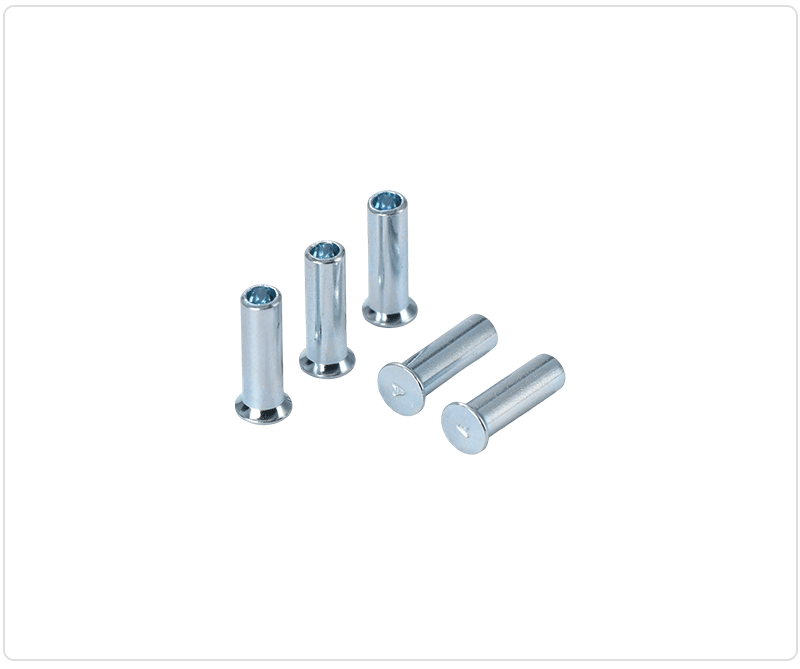
Cold Heading:The Core of Industrial Screw Production
One of the most critical stages in the industrial screw manufacturing process is cold heading.Cold heading is a metal forming method in which the wire is cut into slugs and then shaped into a screw head at room temperature using high-speed dies and punches.This process does not remove material;instead,it redistributes the metal,preserving grain structure and enhancing strength.
Compared with machining,cold heading offers higher production efficiency,better material utilization,and improved mechanical properties.This is why cold heading screws are widely used in automotive,construction,electronics,and industrial machinery applications.
The head shape—whether hex,pan,socket,or custom—is formed during this stage.Precision tooling ensures that head dimensions remain consistent even in large-volume production.
Thread Rolling for Strength and Accuracy
After the head is formed,threads are created through thread rolling rather than cutting.In thread rolling,hardened dies press the thread pattern into the screw blank.This method compresses the material,creating stronger threads with superior fatigue resistance.
Thread rolling also improves surface finish and dimensional accuracy.Since no material is removed,there is minimal waste,making this step both cost-effective and environmentally friendly.For load-bearing or vibration-prone applications,rolled threads significantly outperform cut threads.
Heat Treatment for Mechanical Performance
Many industrial screws require heat treatment to achieve the desired hardness and tensile strength.Depending on the material and application,screws may undergo processes such as quenching and tempering,carburizing,or annealing.
Heat treatment enhances wear resistance and load capacity,ensuring the fasteners perform reliably under extreme stress or temperature variations.Proper temperature control and process timing are crucial—incorrect heat treatment can lead to brittleness or premature failure.
Surface Finishing and Coating
To improve corrosion resistance and appearance,industrial screws often receive surface treatments.Common finishes include zinc plating,black oxide,phosphate coating,and galvanizing.For stainless steel screws,passivation may be applied to enhance corrosion resistance.
Surface finishing is not just cosmetic.In many applications,coatings reduce friction during installation,improve electrical conductivity,or protect screws in harsh outdoor or chemical environments.
Quality Control Throughout the Process
Quality inspection is embedded at every stage of the industrial screw manufacturing process.Dimensional checks,hardness testing,torque testing,and salt spray tests help ensure each batch meets specifications.Advanced manufacturers use automated optical inspection systems to detect defects at high speed.
Consistent quality control minimizes failure risks in real-world applications,especially in industries like automotive,aerospace,and heavy machinery.
Why Understanding the Manufacturing Process Matters for Buyers
For global buyers,knowing how industrial screws are manufactured helps in selecting reliable suppliers.A manufacturer with in-house cold heading,thread rolling,and heat treatment capabilities can better control quality,lead times,and customization.
Understanding the process also helps buyers compare quotes more effectively.A lower price may reflect shortcuts in material quality or inspection,while a transparent manufacturing process often indicates long-term reliability.
Final Thoughts
Industrial screws are the result of a sophisticated combination of material science,precision engineering,and efficient production methods.From raw material selection to cold heading,thread rolling,heat treatment,and surface finishing,every step in the industrial screw manufacturing process plays a vital role in performance and durability.
For businesses sourcing fasteners globally,partnering with manufacturers who master cold heading screws production and maintain strict quality standards is the key to long-term success.
