


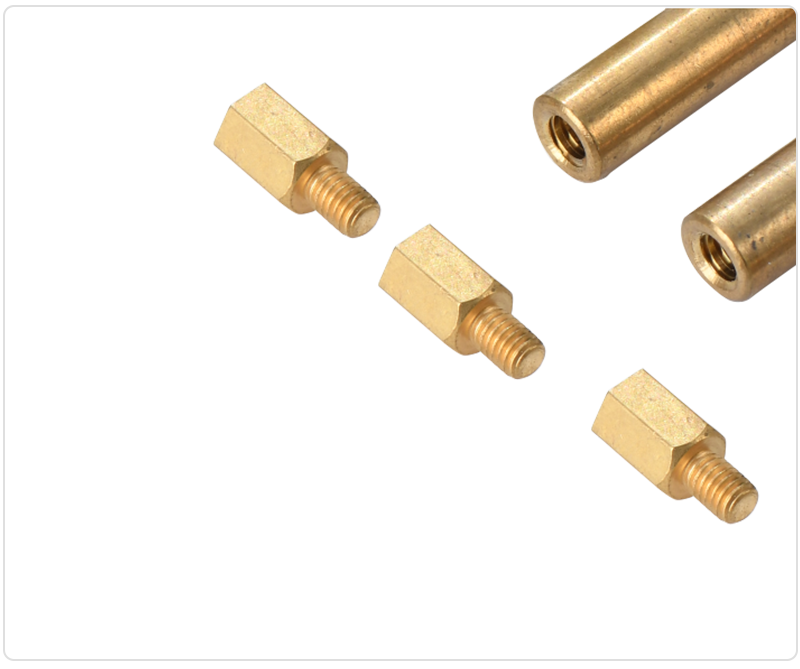
Can Hexagonal Studs be customized according to drawings or OEM requirements
Yes, Hexagonal Studs can be fully customized based on engineering drawings, OEM requirements, or sample-based production. In industrial manufacturing, customization is often necessary because standard fasteners cannot meet all mechanical or structural requirements.
1. Drawing-based manufacturing (most precise method)
Production based on technical drawings is the most accurate customization method. Engineers define all critical parameters including dimensions, thread specifications, tolerances, and material grades.
Key drawing elements include:
Diameter and length specifications
Thread type (metric, UNC, UNF)
Tolerance requirements (precision class)
Material selection and heat treatment
2. OEM manufacturing capabilities
OEM production allows clients to define product specifications according to their own brand or engineering system. This includes:
Custom dimensions and geometry
Private labeling or packaging
Material and coating selection
Batch production consistency control
3. Material engineering and customization options
Different industrial applications require different materials. Common options include:
Carbon steel for cost-efficient applications
Alloy steel such as 42CrMo for high-strength environments
Stainless steel A2/A4 for corrosion resistance
Material selection is often determined by load conditions, temperature, and environmental exposure.
4. Heat treatment and mechanical performance improvement
Heat treatment plays a critical role in improving mechanical properties such as hardness, tensile strength, and fatigue resistance. Common processes include quenching and tempering for alloy steel studs.
5. CNC machining and precision control
Modern CNC machining ensures high dimensional accuracy and consistency across large production batches. This is especially important for machinery assemblies where tolerance errors can lead to system failure.
6. Surface treatment options
Surface finishing improves corrosion resistance and functional performance:
Zinc plating for general protection
Black oxide for wear resistance
Nickel plating for enhanced durability
7. MOQ and production scalability
Manufacturers typically support both small-batch prototyping and large-scale production. MOQ depends on material type, complexity, and machining requirements.
8. Quality control and inspection
Professional manufacturers implement strict quality control, including:
Dimensional inspection
Thread gauge testing
Hardness testing
Surface finish inspection
Conclusion
Hexagonal Studs can be fully customized to meet OEM and engineering requirements. With proper material selection, precision machining, and quality control, custom studs can significantly improve mechanical performance and system reliability.
Request a quotation
If you have drawings or OEM requirements, please send them to us. We will provide engineering evaluation, material recommendations, and fast quotation support.
